Rhode Island Attorney General Files Suit Against Kalshi and Polymarket Over Event Contracts
Written by Frankie Lang · May 29, 2026

Rhode Island Attorney General Files Suit Against Kalshi and Polymarket Over Event Contracts
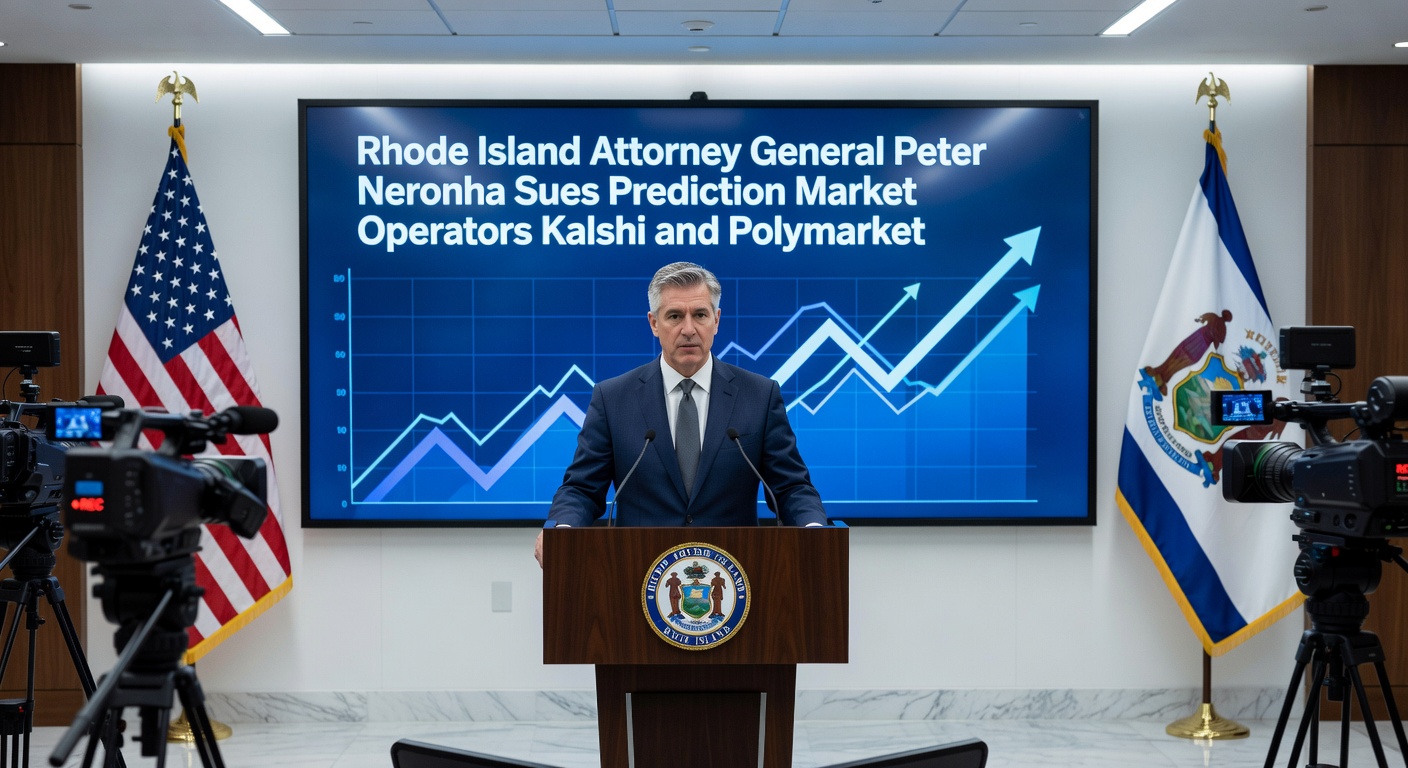
Attorney General Peter Neronha filed a lawsuit in Rhode Island state court against prediction market operators Kalshi and Polymarket, and the action centers on allegations that their sports-related event contracts constitute illegal sports betting plus online casino gaming under state law while bypassing the regulated gambling framework. The filing came after Kalshi initiated a federal lawsuit against the state just hours earlier, and that preemptive move asserted federal oversight through the Commodity Futures Trading Commission as the proper regulatory authority for derivatives and swaps rather than state-level gambling statutes.
State officials described the platforms' offerings as operating outside established channels for taxation and consumer protections, while the companies maintain their products fall squarely under CFTC jurisdiction because they function as financial instruments tied to event outcomes. Court documents outline how these contracts allow users to trade positions on sports results and other occurrences, and the attorney general's complaint argues such activity mirrors traditional betting forms that Rhode Island has chosen to license and monitor through its own system.
Details of the State Court Filing
The complaint alleges that Kalshi and Polymarket have conducted sports gambling activities without obtaining necessary approvals or contributing to state revenues designated for regulated operators, and it points to specific contract structures that permit wagers on athletic events through prediction mechanisms. Rhode Island law requires all forms of sports betting and casino-style gaming to route through licensed entities, yet the platforms reportedly offered these contracts directly to residents via online interfaces. Prosecutors in the attorney general's office compiled evidence from public marketing materials and user activity data to support claims of unauthorized operations spanning multiple months.
Kalshi's federal action, filed in advance of the state suit, seeks declaratory relief establishing that CFTC rules preempt conflicting state measures, and the company cited prior federal approvals for similar event contracts as evidence of its compliant status. Polymarket faces parallel accusations in the state filing even though it has not initiated separate federal proceedings at this stage, and both entities now navigate overlapping legal tracks in different court systems. Observers note that the timing of the federal filing created a procedural layer that could influence how the state case proceeds through initial hearings.
Arguments Over Regulatory Authority
Kalshi contends its platforms trade in derivatives regulated at the federal level, and this classification stems from CFTC determinations that treat event contracts as swaps rather than wagers subject to state gambling commissions. The company referenced existing federal frameworks that have allowed comparable products in other jurisdictions, while state attorneys argue the contracts' direct linkage to sports outcomes brings them under Rhode Island statutes regardless of any federal label. This tension highlights broader jurisdictional questions that have surfaced whenever prediction markets expand into areas traditionally reserved for licensed gambling operators.
The state complaint further asserts that the platforms evade requirements for age verification, responsible gaming tools, and revenue sharing that apply to authorized sportsbooks and casinos within Rhode Island borders. Data from the filings shows thousands of transactions involving Rhode Island users on sports-related contracts, and the attorney general's office maintains these activities generate untaxed proceeds that should support state programs. Kalshi's federal complaint counters that imposing state rules would fragment a national market already supervised by a single federal agency, and it asks the court to block enforcement actions until the regulatory conflict resolves.
Background on the Involved Parties
Peter Neronha has overseen multiple enforcement actions related to unauthorized gambling since taking office, and this latest case builds on prior efforts to maintain state control over betting activities. Kalshi operates as a CFTC-registered exchange that lists contracts on diverse events including elections and economic indicators, whereas Polymarket functions as a decentralized platform using cryptocurrency for similar prediction trades. Both have grown rapidly amid rising interest in outcome-based markets, yet their expansion into sports categories triggered the current dispute with Rhode Island regulators.
Traditional gambling interests within the state have monitored these developments closely because prediction platforms potentially divert activity away from licensed venues that contribute directly to local tax collections. The lawsuit references communications between state officials and the companies prior to filing, and those exchanges reportedly failed to produce an agreement on how the contracts could continue under existing rules. Federal court records from Kalshi's action include exhibits detailing CFTC review processes that approved certain event contracts, and these materials now form part of the competing legal narratives.
Potential Next Steps in the Litigation
The dual filings set up a scenario where state and federal judges may address overlapping issues, and procedural motions could determine which court retains primary jurisdiction over the core questions. Rhode Island courts will examine whether the event contracts qualify as gambling under state definitions, while the federal case focuses on preemption doctrines that could limit state enforcement. Legal teams on both sides have begun exchanging preliminary documents, and scheduling orders are expected to outline discovery timelines stretching into subsequent months.
Additional parties, including industry associations representing licensed operators, may seek to file amicus briefs that present views on how expanded prediction markets affect existing regulatory structures. The attorney general's press release outlines the state's intent to pursue injunctive relief that would halt sports-related contracts for Rhode Island users pending resolution, and Kalshi has indicated it will defend its federal authorization vigorously in the parallel proceeding.
Conclusion
This legal confrontation between Rhode Island officials and the two prediction market platforms underscores ongoing questions about how event contracts fit within established gambling regulations versus federal derivatives oversight. The state court action and the earlier federal filing create parallel tracks that will likely generate further rulings on jurisdiction, taxation, and compliance standards as proceedings advance. Stakeholders across regulatory agencies, licensed gambling entities, and platform operators continue to track developments that could shape similar disputes in other states.